
5 Ways to Spot Fake Profiles on Personals Sites
Fake profiles are everywhere on personals sites, and falling for one can cost you time, money, and even your personal information. In 2023 alone, romance scams in the U.S. resulted in $1.14 billion in losses, with victims losing an average of $3,000 each. Here’s how to protect yourself:
- Check Photos: Look for overly polished or professional-looking pictures. Use reverse image search tools to verify if the image is stolen.
- Review Profile Details: Watch for vague, inconsistent, or overly perfect bios. Ask specific questions to test their responses.
- Search for a Digital Footprint: Real people leave traces online. A complete lack of online presence is a red flag.
- Analyze Communication Patterns: Be wary of generic messages, overly affectionate language, or attempts to move conversations off-platform quickly.
- Verify Location Claims: Test their knowledge of local spots and routines. Fake profiles often struggle to provide specific details.
Quick Tip: Request a video call early on. Scammers often avoid live interactions. Platforms like SeekingList can also help by offering tools like city-based filtering and secure email systems to keep you safe.
Staying alert and combining these strategies can help you avoid scams and connect with genuine people.
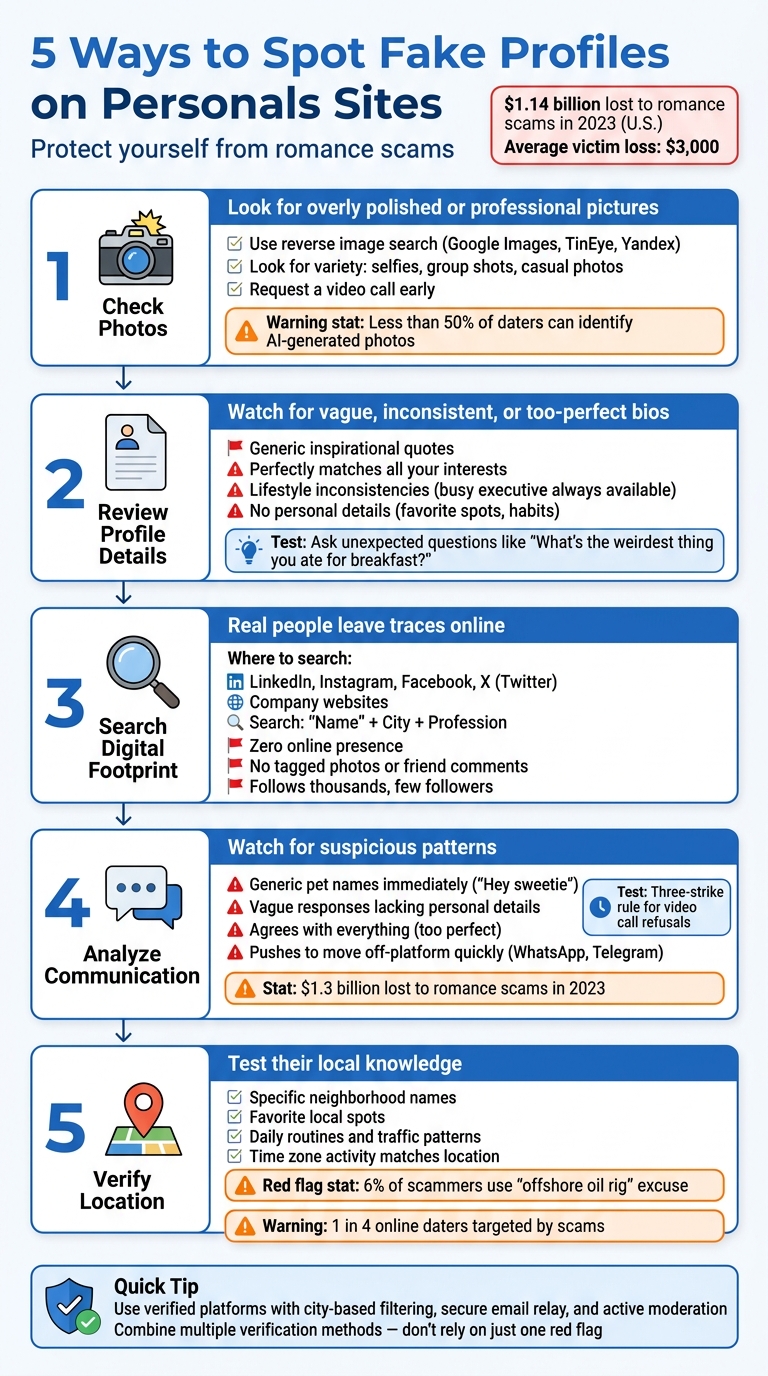
5-Step Guide to Spotting Fake Profiles on Dating Sites
Seven Ways to Identify Fake Dating Profiles
sbb-itb-47dd745
1. Check Photos for Signs of Fraud
The first step in spotting fake profiles is to carefully examine the photos. Perfectly polished images can be a warning sign. Scammers often swipe professional pictures from modeling portfolios, influencers, or stock photo websites. Amir Sharifian, Founder of PeopleFinder.app, puts it simply:
"If it looks like a modeling portfolio, it probably is one - stolen from an actual model or influencer."
Authentic profiles tend to feature a mix of photos, including casual selfies, group shots, or pictures taken at recognizable events or locations. If you notice a profile with just one photo or images that seem too curated, proceed with caution. A variety of candid photos often signals a genuine user and provides a solid foundation for further checks.
To dig deeper, try a reverse image search. Save the photo and upload it to Google Images to see if it appears elsewhere online. For more advanced fake profiles, tools like Face2Social can help by scanning the face across multiple platforms, even when the exact image isn’t widely used.
If the reverse image search doesn’t raise concerns, take things a step further by requesting a video call early on. Scammers frequently dodge live calls with excuses like a "broken camera" or "poor connection." With fewer than half of online daters able to tell real photos from AI-generated ones, a live video call is one of the most effective ways to confirm someone’s authenticity.
2. Look for Inconsistent Profile Details
After reviewing the photos, shift your focus to the profile text. Check if the details seem realistic and consistent. Fake profiles often include vague or contradictory information, as scammers typically find it hard to keep their stories straight over time.
Be cautious if a profile feels too perfect or seems tailored specifically to your interests. For instance, if someone claims to love every hobby you’ve mentioned in your bio, it might be a tactic to create a false connection. Genuine people have their own unique preferences and won’t align with you on every single detail. As dating blogger Krystyna Trushyna wisely notes, "Real women have inconvenient opinions."
Lifestyle inconsistencies can also be revealing. If someone claims to be a busy executive but is always available during work hours, that’s a red flag. Similarly, if they say they live in a specific city but can’t name basic landmarks or neighborhoods, they might not be truthful about their location.
Another warning sign? Generic biographies. Fake profiles often rely on copy-paste descriptions filled with generic inspirational quotes but lack any personal touch. You won’t find mentions of a favorite coffee shop, quirky weekend habits, or details about their daily life.
To test for authenticity, ask unexpected and specific questions like, "What’s the weirdest thing you’ve ever eaten for breakfast?" Real people can easily share these small, personal tidbits, while bots or scammers often falter when faced with unscripted questions.
3. Search for Their Digital Footprint
After reviewing photos and profile details, the next step is to dig into their digital footprint. Real people tend to leave traces online - whether it’s on LinkedIn, Instagram, or even company websites. A complete absence of an online presence can be a serious red flag. Digital privacy researcher Ryan Mitchell emphasizes this point:
"Finding absolutely no results can be a bigger red flag than finding a match."
Start by searching their name in quotes alongside their city or profession (e.g., "Sarah Johnson" + "Denver" + "Nurse"). This can help narrow down your results. Then, check popular platforms like Facebook, Instagram, LinkedIn, and X (formerly Twitter). Real profiles often show tagged photos, comments from friends or coworkers, and other signs of genuine social connections. Dating coach John Keegan adds:
"If they look like a model, have a thriving career, and seem to have no flaws, they may be a work of fiction."
To dig deeper, cross-reference their details across multiple platforms. Look for consistent information and mutual connections, which are often missing from fake profiles. Be cautious of accounts that follow thousands of people but have few followers or lack meaningful engagement.
If you’re still unsure, reverse image search tools like Google Images, TinEye, or Yandex can be incredibly helpful. TinEye allows you to sort results by date, making it easy to spot if a supposedly "recent" photo has been circulating for years. Yandex, on the other hand, is great for facial recognition, often uncovering alternate photos of the same person in different settings or outfits.
If their online presence seems suspiciously thin, it’s best to trust your instincts and move on. Better safe than sorry.
4. Watch for Suspicious Communication Patterns
When you start chatting with someone, pay close attention to the tone and content of their responses. Fake profiles often give themselves away with overly generic or overly affectionate phrases like "Hey sweetie" or "You're so beautiful, baby" right off the bat. Scammers use these generic pet names and unrelated comments to create a false sense of intimacy while avoiding genuine conversation. If you notice this, it’s worth taking a closer look at the substance of their messages.
Responses that lack personal details are another red flag. For instance, if you share something about your day and they reply with a vague compliment or suddenly change the topic, you might be dealing with a scripted operator. Just like inconsistencies in photos or vague personal details, a lack of meaningful conversation can signal a fake profile.
Be cautious of someone who seems "too perfect." If they agree with everything you say and never show personal quirks or differing opinions, it could be a sign of deception. Real people have unique perspectives and aren't afraid to express them. A good way to test this is with the "breakfast test." Ask something light and specific like, "What’s the weirdest thing you ate for breakfast this week?" A genuine person will likely respond with something natural and specific, while a scammer or bot may struggle to provide a convincing answer.
Another warning sign is when the person tries to move the conversation to an off-platform app like WhatsApp, Telegram, or Kik too soon. Dating apps often have built-in fraud detection systems to catch suspicious activity, so scammers attempt to bypass these safeguards. Amir Sharifian, founder of PeopleFinder.app, explains:
"Dating apps have fraud detection systems that flag suspicious behavior... if you report the scammer, the dating app can ban them. Once you're communicating on WhatsApp, there's no moderation layer."
If these red flags persist, a video call can be a quick way to confirm someone’s authenticity. Use the three-strike rule: while declining one video call might be understandable, three or more refusals - especially with excuses like a broken camera, bad internet, or shyness - could indicate deception. This is particularly important, as romance scams led to losses of $1.3 billion in the U.S. in 2023, with the average victim losing over $3,000. Trust your instincts and insist on video verification before investing further in the relationship.
5. Check if Location Details Match Up
Once you've reviewed photos, profile details, and digital traces, it's time to verify if someone's location claims make sense. A true local often talks easily about specific neighborhoods, favorite spots, or their day-to-day life. On the flip side, fake profiles tend to stay vague when asked about these details. For instance, someone might say they're from your city but can't name a popular coffee shop or describe their usual weekday routine.
Be wary of profiles that claim to be local but have excuses for being far away. Scammers often explain their absence with stories about business trips, military service, or offshore jobs. Did you know that 6% of romance scammers use the offshore oil rig story as a reason they can't meet in person?. If someone claims they're from your area but immediately mentions being thousands of miles away, that's a red flag.
Also, pay attention to how they communicate and their time zone activity. If someone says they're a native English speaker from Dallas but sends poorly written messages, they might actually be operating from another country. Similarly, if they're messaging you at odd hours - like 3:00 AM - it might not match the daily rhythm of someone living in your time zone.
Try asking about their daily routines or local experiences. Genuine locals will naturally share specific details, like traffic woes or their favorite lunch spot. Scammers, however, often respond vaguely or try to steer the conversation elsewhere. Real people don't just share polished responses - they'll mention the small, unglamorous parts of life too.
Lastly, be cautious if someone claiming to be local suddenly asks for money before meeting. This is a common scam tactic: they build trust, ask for funds, and then vanish. With one in four online daters reporting they've been targeted by scams, verifying location details early can save you from financial and emotional loss. Platforms like SeekingList, which focus on verified local profiles, can be a helpful tool to confirm someone's location and avoid potential scams. Taking this step strengthens your defenses against fraudulent profiles.
Safer Alternatives: Using Verified Platforms
Picking the right platform can make all the difference when it comes to avoiding scammers. Some personals sites barely monitor activity, leaving users vulnerable, while others prioritize security with tools that help weed out fraudulent accounts. This is where platforms like SeekingList shine.
SeekingList focuses on three standout security measures designed to protect users. First, its city-based browsing allows you to filter for local matches, making it tougher for scammers to hide behind vague claims about their location. If someone says they're from your city, you can easily verify their knowledge of local landmarks or routines. Second, the platform uses a secure email relay system, which keeps your personal contact details private. This means you can communicate without sharing your email address or phone number, reducing the risk of identity theft or unwanted contact. Finally, active moderation identifies and removes fake profiles before they can cause harm. Together, these features align with the fraud detection strategies discussed earlier, offering a safer online experience.
The email relay system is especially handy because it acts as a safety buffer. Scammers often try to push conversations to external apps like WhatsApp or Telegram, where platform safeguards no longer apply. By sticking to SeekingList's relay system, you maintain control over the interaction and protect your private information. If someone immediately asks for your phone number or email, consider it a warning sign - genuine users typically understand the importance of staying on-platform at first.
City-based filtering also adds a layer of accountability. When both parties expect to meet locally, it discourages scammers who rely on distance and anonymity. You can ask specific questions about local spots, traffic patterns, or favorite hangouts - details that real locals can answer with ease but fraudsters often struggle to fake convincingly.
On top of these security features, SeekingList keeps its service free for browsing and posting. Unlike some platforms that charge for basic safety tools, SeekingList offers verified local profiles, secure communication, and active moderation without any subscription fees. This combination of privacy protection, location-based transparency, and proactive oversight makes it an excellent choice for anyone looking to avoid fake profiles and stay safe online.
Conclusion
Spotting fake profiles isn't just about relying on gut feelings - it’s about combining multiple verification methods to turn suspicions into certainty. From analyzing photos and cross-checking details to searching for digital footprints and verifying locations, these steps can help uncover even the most sophisticated scams. The statistics are sobering: around 608 million people worldwide fall victim to online scams each year, and one in four online daters report being targeted by scammers. These numbers highlight the importance of staying vigilant - it’s not overcautious; it’s necessary.
"Learning to spot these red flags isn't just about avoiding scams; it's about protecting your most valuable, non-renewable asset: your focus." – The Mind Decoder
Genuine profiles tend to reflect real-life quirks and specific details, while scam profiles often feel overly polished, designed to appeal to everyone. Asking unexpected, off-script questions can also reveal whether you're dealing with a real person or someone following a script.
Using secure platforms can make the verification process even easier. For example, SeekingList offers features like secure email relay, city-based filtering, and active moderation - all at no cost. These tools align perfectly with the verification techniques discussed, helping you ensure your connections are authentic.
While instincts are important, they should always be backed up with evidence. If someone seems too perfect, mirrors your interests a little too closely, or pushes to take the conversation off-platform right away, take a step back and verify their claims. Building multiple layers of verification - not relying on just one warning sign - can save you from losing time, emotional energy, or even money.
FAQs
What are the biggest red flags that a profile is fake?
Fake profiles often share certain warning signs that can help you identify them. Here are some common ones to watch out for:
- Unverified Accounts: Profiles without verification badges or credentials can be a red flag.
- Incomplete or Unrealistically Perfect Profiles: If a profile seems too polished or lacks essential details, it might not be genuine.
- Inconsistent Information: Watch for contradictions in their bio, photos, or messages.
- Rushing to Private Communication: Be wary of users who push for private chats or in-person meetups without taking time to build trust.
Keeping an eye out for these signs can help you avoid scams or potentially unsafe encounters. Always prioritize your safety and trust your instincts.
How can I verify someone without sharing my phone number?
You can confirm someone's identity without giving out your phone number by using profile verification features offered by certain platforms. Many platforms let users filter for verified profiles, which adds a layer of trust.
Another handy method is using reverse image search tools to see if profile pictures have been copied from elsewhere. These approaches provide reliable ways to verify someone without needing to share personal contact details.
What should I do if someone asks for money or gift cards?
If someone requests money or gift cards, it’s a huge warning sign and almost always a scam. Scammers frequently use this strategy to take advantage of people. To protect yourself, cut off all communication with the individual right away and never share personal or financial information. Being vigilant is key to avoiding fraud or theft.