
How To Stay Safe When Meeting In Person
Meeting someone in person after connecting online can be exciting but comes with risks. To stay safe, follow these steps:
- Verify their identity: Use video calls, reverse image searches, and check social media for consistency. Trust your instincts if something feels off.
- Share your plans: Tell a trusted friend where you're going, who you're meeting, and when you’ll be back. Share your live location and set check-in times.
- Choose public places: Meet in busy, well-lit areas like coffee shops or restaurants. Avoid secluded spots or private residences.
- Handle your own transportation: Drive yourself or use rideshare services to stay in control of your arrival and departure.
- Limit personal info: Don’t share your home address, workplace, or financial details early on. Use apps with privacy features.
- Stay alert during the meeting: Keep alcohol to a minimum, watch your drink, and trust your gut. Leave if you feel unsafe.
Preparation and caution can help you enjoy the experience while minimizing risks.
Preparing Before You Meet
Research Your Match Online
Before meeting someone new, take the time to verify their identity. Start with a video call through FaceTime or the app's built-in features to confirm their appearance matches their profile photos and to get a sense of their personality. This step helps ensure you're connecting with the person they claim to be.
You can also use tools like Google Image Search to perform a reverse image search of their photos. This can reveal if their pictures are used elsewhere online. Additionally, check their social media profiles on platforms like LinkedIn, Instagram, or Facebook to see if their story adds up. Consistency in their details is key.
Platforms like SeekingList offer extra safeguards, such as private email relay and AI threat detection, to enhance your verification process. For added assurance, you can ask for a selfie with today’s date or a specific phrase. Dating coach Joshua Pompey emphasizes the importance of trusting your instincts:
Safety is really important, so first and foremost, if something instinctively rubs you the wrong way, don't meet that person.
Pay close attention to any inconsistencies in their background or claims. Digital anthropologist Dr. Lena Torres highlights this as a critical safety measure:
The strongest safety signal isn't a verified badge - it's consistency in voice, timing, and topic. Someone who answers quickly about café hours but evades simple questions about their neighborhood? That's your cue to slow down.
Once you've done some initial verification, make sure someone you trust knows about your plans before meeting your match.
Tell a Trusted Friend
Always let someone you trust know about your plans when meeting a new person. Share details like your match's name, the meeting location, and your expected return time. This step can provide peace of mind and an added layer of safety.
Consider sharing your match’s profile and enabling real-time location sharing with a trusted friend, family member, or roommate. Set specific check-in times to confirm your safety during the meeting. You can also create a code word or safe phrase to use if you feel uncomfortable - this allows your contact to call you with an excuse to leave discreetly.
Studies show that 50% of people feel more secure meeting someone new when they’ve shared their plans with someone else. Drop a pin with the venue’s location and send a final text once you’ve safely returned home. These small steps can make a big difference in ensuring your safety.
Once your trusted contact is informed, you can take additional precautions by looking into your match's background.
Consider Background Checks
Conducting a background check is another way to enhance your safety. Platforms like SeekingList allow users to undergo background searches, offering verification badges that confirm identities through photo or ID checks. They also screen for individuals listed in publicly available sex offender registries and prohibit anyone convicted of felonies or violent or sexual crimes from using the service.
If you want to take things a step further, many local databases provide free access to criminal records. For example, in Texas, the Department of Public Safety has created an online database as part of Texas House Bill 5202. This resource includes information on offenders with multiple convictions for domestic violence or stalking. Elissa Jorgensen from The Dallas Morning News explains:
Under Texas House Bill 5202, the Department of Public Safety has created a free, online database that contains information on domestic violence offenders who have been convicted two or more times of crimes relating to violence and stalking.
Verification badges on profiles can also be a helpful indicator that someone’s identity has been confirmed. Relationship experts report that clients who thoroughly vet their matches before meeting experience a success rate of over 99%. Trust your instincts, take your time, and ensure you feel comfortable before agreeing to meet in person.
sbb-itb-47dd745
Kelly Marie Shares Your Swipe-Safely First Date Checklist
Picking Safe Meeting Locations
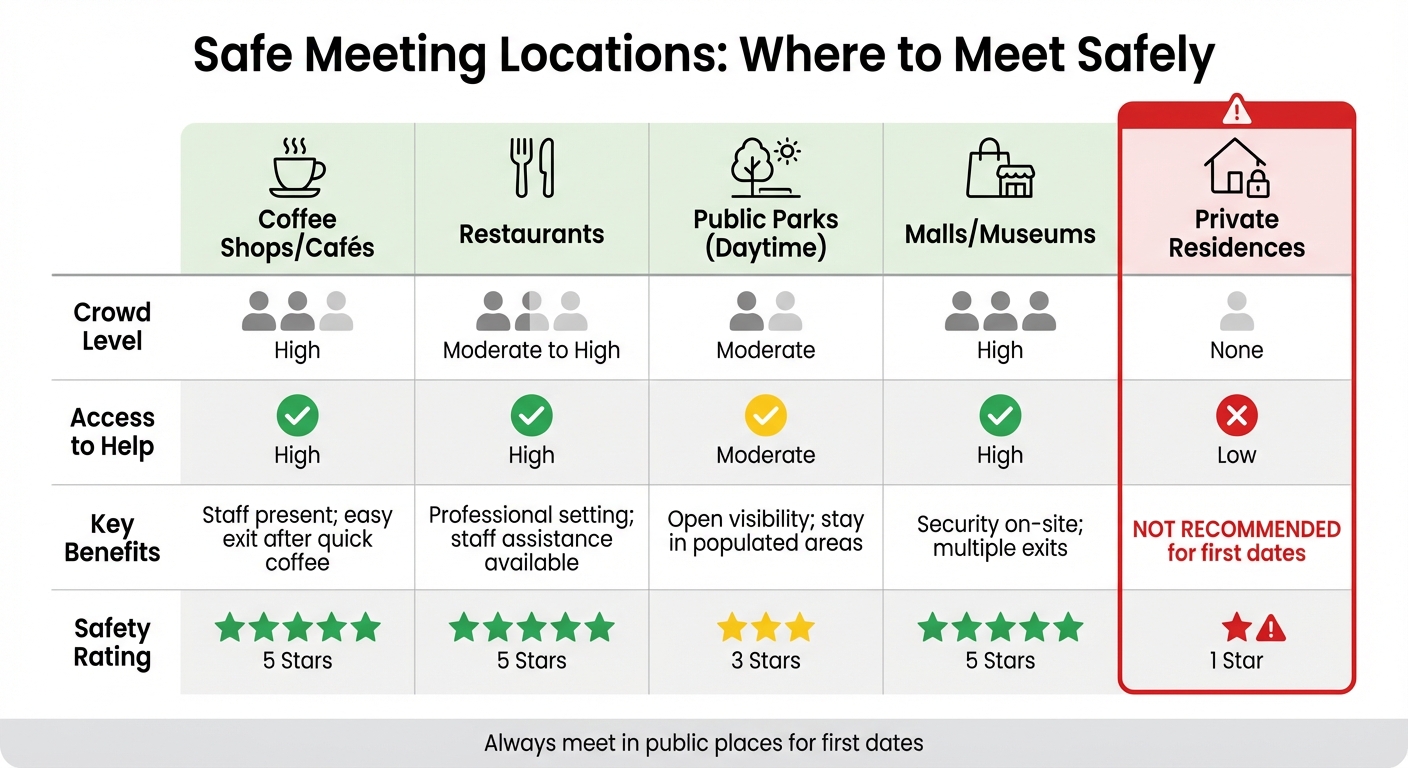
Safe Meeting Locations Comparison Guide
Public and Crowded Spaces
Where you decide to meet for the first time can have a big impact on how secure and at ease you feel. Places like coffee shops, restaurants, malls, and museums are great options. These locations are busy, well-lit, and have staff around, which can discourage unsafe behavior and provide quick assistance if needed. In fact, 60% of people report feeling safer meeting in public settings.
Sexologist and author Gigi Engle underscores this point:
Try to meet somewhere where other people will be present. That way you're out in the open and not risking your bodily safety.
Daytime meetups in bustling areas are even better. They offer more visibility and make it easier to spot any red flags. Choose places near police stations, hospitals, or 24-hour businesses, so help is close by if needed. Even in public parks, avoid secluded spots like hidden trails or benches. Stick to open spaces where others are nearby.
To make planning easier, platforms like SeekingList suggest verified safe venues for meetups.
Familiar Places You Know
Picking a venue you’re already familiar with gives you an edge. Knowing the layout and exit points can ease anxiety and help you leave quickly if necessary.
Have two trusted public locations in mind so you can suggest a safe spot if your date is undecided. Also, make sure the venue has reliable cell service. This is crucial for using safety apps or reaching out for help. A study shows that 72% of people feel more confident meeting someone new when they have access to a charged phone.
Different venues come with their own pros and cons. The table below highlights how some common meeting spots stack up.
Location Comparison
| Location Type | Crowd | Access | Benefits |
|---|---|---|---|
| Coffee Shops/Cafés | High | High | Staff always present; easy to leave after a quick coffee. |
| Restaurants | Moderate to High | High | Professional setting; staff can assist if something feels off. |
| Public Parks (Day) | Moderate | Moderate | Open spaces with visibility; stick to areas with other people around. |
| Malls/Museums | High | High | Security on-site; multiple exits and lots of foot traffic. |
| Private Residences | Low (None) | Low | Not suitable for first dates - no witnesses or staff to help if needed. |
Avoid private residences for early dates. As Julie Spira advises, "On a first date, you should never have anyone pick you up at home". Safety comes first, and public spaces provide the visibility and support you need for peace of mind.
Managing Transportation and Privacy
Drive Yourself
How you get to and from your first meeting matters just as much as where it takes place. Always handle your own transportation - whether that means driving yourself, using a rideshare service like Uber or Lyft, hopping on public transit, or asking a trusted friend for help. This ensures you have full control over when you arrive and leave, keeping your independence intact.
Never let a first-time date pick you up at your home or workplace. Depending on someone else for a ride can limit your freedom and make it harder to leave if the situation feels uncomfortable.
To stay prepared, download rideshare apps ahead of time or have a friend ready to assist if needed. Make sure your phone is fully charged, and bring a portable power bank just in case. If you're using a rideshare, double-check the driver's identity and vehicle details before getting in.
Once your transportation is sorted, focus on protecting your personal information during early interactions.
Keep Personal Details Private
Guarding your home address and other personal details is key when meeting someone new. Avoid sharing your exact street address, workplace, or other identifying information until you’ve established trust. If someone asks where you live, stick to general answers like mentioning your neighborhood or saying "the north side" instead of providing specifics.
Platforms like SeekingList can help you maintain privacy by offering tools like email relay, which lets you communicate without revealing your personal email or phone number. Similarly, apps like Seeking and Bumble offer video chat features, so you can get to know someone better without exchanging contact details right away.
Be mindful of the photos you share. Consider sending screenshots of your photos to remove embedded GPS data. Also, review the backgrounds of your pictures - street signs, license plates, or recognizable storefronts can unintentionally give away your location.
Share Your Location in Real-Time
Taking privacy a step further, sharing your live location can boost your safety. Use the "Share My Location" feature on your iPhone or Android to let a trusted friend or family member track your movements during the meeting. This feature runs quietly in the background.
Choose someone nearby who can reach you quickly if necessary. When you arrive, drop a pin on your map app and send it to your contact. Set a specific check-in time and agree on a "safe" codeword. If you miss the check-in or use a different phrase, your friend will know to take action.
Statistics show that 50% of people feel safer when someone knows their plans, and 72% feel more confident knowing they can reach out if something feels wrong. As sexologist Gigi Engle explains:
If you have extra precautions in place that make you feel like you're not in harm's way, you're going to be able to let some of those anxieties go, relax, and be yourself.
For an added layer of security, try a safety app like Rescu, which allows you to contact emergency services with just two taps - no need to speak.
Safety Tips During the Meeting
After organizing your logistics and transportation, these tips can help you stay safe during in-person meetings.
Keep It Short
Set a clear time limit for your meeting, like wrapping up by 10:00 PM. When making plans, frame it naturally: "I’d love to grab coffee at 2:00; I have to meet a friend at 3:30, but that gives us plenty of time to chat". This approach not only keeps things concise but also gives you an easy exit if needed.
Stay Alert and Limit Alcohol
Alcohol can dull your awareness and make it harder to notice warning signs. Sexologist Gigi Engle suggests avoiding alcohol entirely for first meetings:
When you drink alcohol, it brings down your defenses. I recommend sticking with a non-alcoholic date.
If you do decide to drink, set a firm limit - one or two drinks maximum - and stick to it.
Never leave your drink unattended. Order your own drink and watch it being prepared; bottled beverages add an extra layer of safety. If you step away, take your drink with you or order a new one when you return.
Pay attention to how your date reacts to your boundaries. If they pressure you to drink more or disregard your limits, consider it a red flag. Relationship coach Lucy Rowett advises:
Stay firm, but be kind. While we may be nervous about boundaries, it's always best to assume your match has good intentions first and then work with how they respond to you.
Their response can reveal whether they respect your boundaries. Trust your instincts if something feels off.
Trust Your Gut
Your instincts often pick up on subtle signals that your conscious mind may overlook. If anything feels wrong, leave immediately. Arrange for a trusted friend to call you at a specific time during the meeting. Use a code word if necessary, so they know whether you need help. If you feel unsafe, don’t hesitate to ask a bartender or server for assistance. As Dominique Fluker explains:
If you feel uncomfortable in a situation, it can help to find an advocate nearby. You can ask the waiter or bartender to help you create a distraction, call the police, or get a safe ride home.
If your safety is at risk, it’s okay to excuse yourself for a "restroom break" and leave the venue without returning to the table.
After the Meeting: What to Do Next
After your meeting, it’s important to reflect on your experience and take steps to maintain your privacy and safety.
Talk to a Trusted Friend
Once you’re home, text a trusted friend to let them know you’ve arrived safely. Share your thoughts on how the meeting went - did you feel at ease? Were there any red flags? Trust your instincts. If something didn’t sit right, it’s okay to cut off communication or block the person entirely. Your comfort and safety should always come first.
After confirming your safe return, take some time to decide if you’re ready to move forward with intimacy.
Use Neutral Spaces for Intimacy
If you’re considering intimacy after a successful meeting, choose a neutral location like a hotel in a safe area with 24/7 reception. The HUD App Team emphasizes:
If you're planning to have sex, go to someplace neutral like a hotel, not your home or your date's home. Choose a hotel that is in a safe area, preferably one that has a human at the front desk so there's someone to actually see you as you check in.
Avoid sharing your home address or letting your date drive you home during the early stages of getting to know each other. Similarly, keep your workplace, daily habits, and financial details private until the relationship feels secure.
Continue Using SeekingList for Communication
To maintain secure communication, stick with SeekingList’s private email relay system. Sharing your primary phone number can inadvertently expose sensitive information, such as your residential address, through reverse-lookup tools. Even photos sent via standard text messaging can include GPS metadata that reveals your exact location. Scammers or predators may push to move conversations to less traceable apps, bypassing the safety features of the original platform.
SeekingList’s email relay system keeps your personal contact information private while allowing you to communicate securely. Plus, the platform’s city-based browsing and categorized listings make it easy to find other potential matches if this connection doesn’t pan out. Only share your phone number after at least one successful in-person meeting.
Emily Hartman, Head of Trust & Safety, underscores the risks:
A primary number can reveal your residential address via reverse-lookup.
If your date displayed aggressive, suspicious, or concerning behavior, report them using the platform’s safety tools or contact local authorities if you felt endangered. Research shows that 72% of people feel more confident meeting new individuals knowing they can quickly reach out for help if they feel uncomfortable.
Conclusion
Meeting someone in person for the first time takes preparation and a good dose of caution. Start by confirming their identity through a video chat, choose well-known and secure locations, and use your own transportation. It’s also wise to keep personal information to yourself until trust has been built.
When the meeting happens, stay aware of your surroundings, go easy on alcohol, and always trust your gut. As Gigi Engle explains, taking safety measures can actually help you feel more at ease:
If you have extra precautions in place that make you feel like you're not in harm's way, you're going to be able to let some of those anxieties go, relax, and be yourself.
FAQs
What are the biggest red flags before meeting?
When meeting new people online, there are several warning signs to watch out for. Be wary of unverified accounts or profiles that seem incomplete - these can be signs of fake or deceptive intentions. Pay attention to the quality of photos too; images that are either very low-quality or seem overly polished and perfect can raise suspicion.
Another red flag is overly romantic behavior early on. If someone is quick to shower you with affection or declarations of love before truly getting to know you, it might not be genuine. Additionally, if they consistently avoid video calls or in-person meetings, it could indicate they’re hiding something or engaging in a scam.
Always prioritize your safety and trust your instincts when forming connections online.
What if they push to meet at home or get a ride?
If someone insists on meeting at their home or offers a ride, it's essential to put your safety first. Always choose a public place for your first meeting. Arriving in your own vehicle allows you to maintain control over the situation and leave if necessary. Listen to your gut - if anything feels wrong, don't hesitate to cancel or rearrange the meeting for a safer, public spot. Your well-being should always take precedence.
When is it safe to share my phone number?
It’s a good idea to wait until you’ve built trust and feel at ease before sharing your phone number with someone. Start by communicating through the app or platform - whether it’s chat or video calls - to get a sense of their intentions. If you feel pressured, notice any warning signs, or if they refuse to verify their identity, it’s best to hold off. Your safety should always come first, so trust your gut instincts.